
It was a quiet Tuesday morning behind the front desk of the Middlebury College Admissions Office when I first learned about the memorial trees on campus. A man around the age of 30 entered the building and approached the hefty wooden desk where I worked, a question etched across his face. I was used to helping people stopping by the office to ask for directions around campus, people looking for the library or a good spot to eat lunch, but this man had a request that I had never heard before.
“I was wondering if you could point me in the direction of a particular tree,” he said.
He proceeded to tell me the name of a classmate of his who had passed away during their time at school together; this person had a memorial tree dedicated in his name. It was a concept that, until that moment, I had never heard of. (Judging by the perplexed look shared by a nearby coworker, I would be on my own in helping the man.) So as he stood in front of me, waiting, I quickly plugged the name into my computer next to the words “middlebury college tree,” without much hope of finding any information.
To my surprise, the Google search worked, and I was able to open a file that had a long list of names, each one tagged with a graduation year, a tree species, and GPS coordinates. I found the specific name the man was looking for listed with a bur oak tree that, according to the coordinates, was planted just outside of Ross Dining Hall.
After I gave the man the location of the tree and watched him walk off, I left the file open on my computer so I could look at it later.
That night in my dorm room, I discovered that the document was 53 pages long and contained the coordinates of more than 40 trees planted across the Middlebury campus, each one designated to memorialize a student who had died.
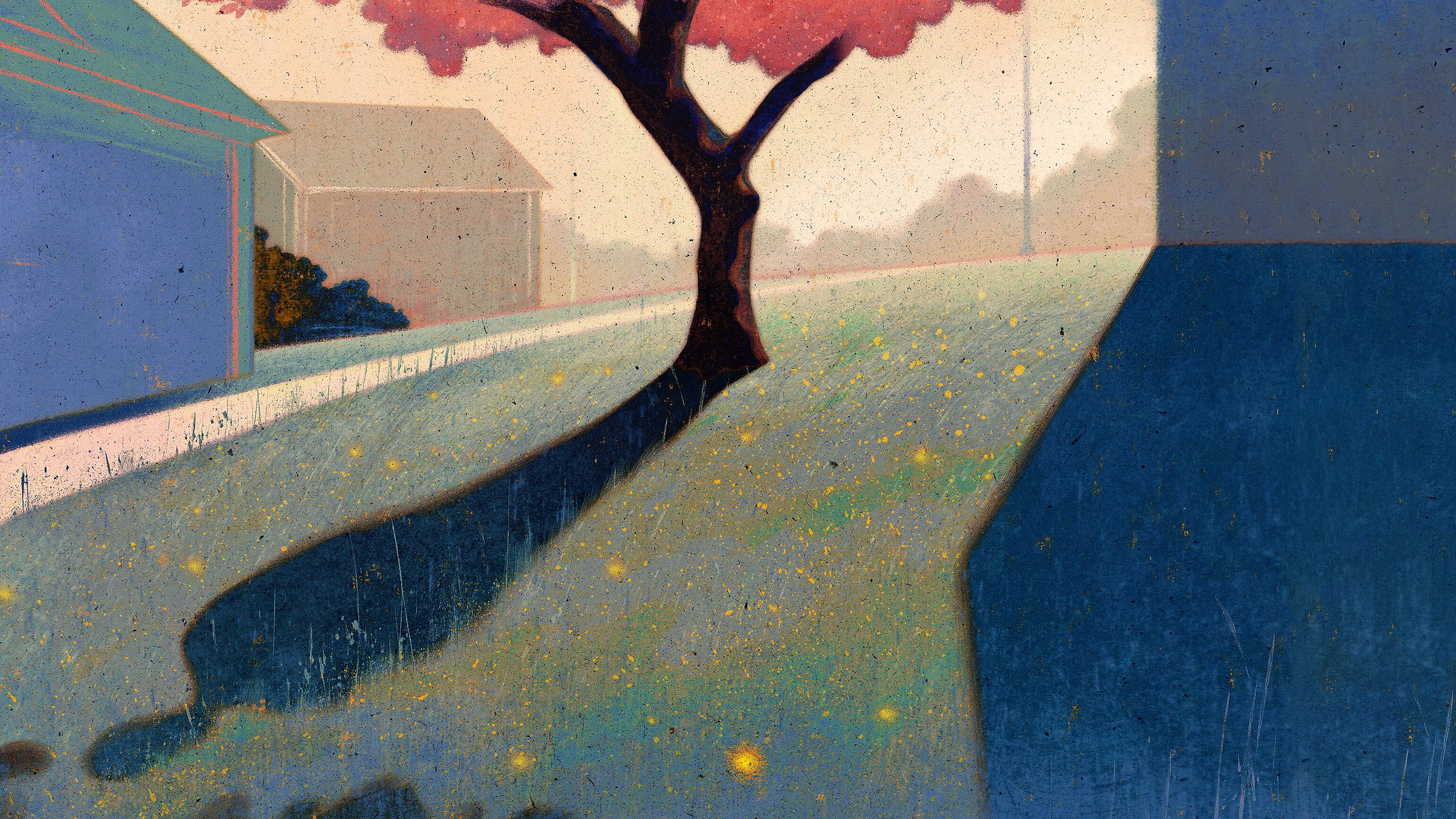
I read through the whole document but then didn’t think much about these trees until a couple months later—when I noticed a fantastically pink crabapple tree flowering on my route back from class.
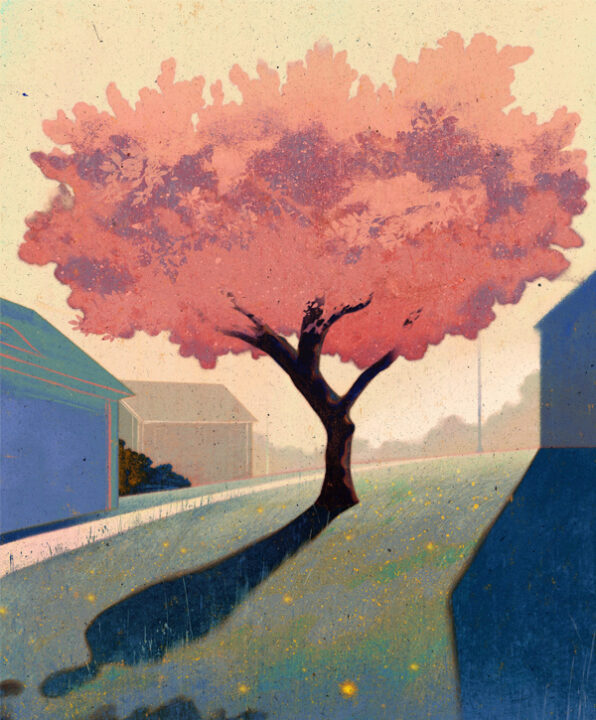
It was one of the first sunny days I had experienced from Vermont in spring, and I was mesmerized to see the trees I had known so long as bare sticks finally filling up with color. I stopped to look at the tree, not because I thought it might be a memorial, but because the crabapple was striking, its petals bursting into the sunshine. Although I must have passed the tree nearly every day on my walk to class, it felt like the first time I had ever seen it before.
It was only once I neared the trunk and spotted an engraved stone nestled in the earth at the tree’s base that I remembered that memorial tree document, and it occurred to me what the tree must be. I leaned down to read the plaque and was stunned.
Of the 40 memorial trees on campus, I would come to learn that 39 of them bear the names of people I had never heard of. Yet this crabapple tree? A tree I had never really noticed before until that sunny day in May? The one with a marker reading: “Selkirk Crabapple”? The plaque read, “In memory of Matthew Munro Slautterback.”
That was a name I was distinctly familiar with.
In 1991, Matt Slautterback, a sophomore at Middlebury, was riding a skateboard after lacrosse practice on the hill next to the Proctor tennis courts when he collided violently with a car turning up that road. Matt suffered serious head injuries and died three days later. He was 20 years old.
Matt was a well-loved member of the campus community, a vibrant classmate and companion to many, and a goalie on the College’s lacrosse team.
He was also one of my father’s closest friends.
The first time I ever visited Middlebury—back when I was a junior in high school and a place I now consider a home was just one campus out of many—my dad took my younger brother and me to an overlook behind a dorm building I didn’t know the name of. We sat down at a picnic table on a small stone patio, facing out toward the stretching branches of trees that covered any view once visible there, and my dad showed us a plaque in the rocks that read Matt’s name with the words “Gift of the Class of 1993.”
I remember watching my dad as he told us Matt’s story, emotion still heavy in his voice more than 30 years later, and it was hard for me to understand what it must have been like for my father, a fresh-faced college sophomore, to experience such a tragedy. How hard it must have been for him to witness someone so bright and young die so suddenly, in such a rapid and incomprehensible incident, someone who was, in many ways, just like him.
The day I noticed the crabapple tree, there was nothing to make me look closely at it other than how beautiful the pink leaves looked against the cloudless blue sky. My dad had known that Matt was remembered with a tree on campus but had never mentioned it to me. When I looked under the eruption of pink petals, the connection to my father shocked me. I immediately pulled out my phone to take a picture of the flourishing crabapple and the stone plaque beneath it and sent the images to my dad.
“Matt’s tree looks so beautiful today!” I texted him before I continued on my walk.
“Thanks, Ruby, this means a lot.” My father’s next response an hour later would last in my thoughts for a long time. “He died today in 1991.”
Matthew Slautterback’s story is one that I knew before I had ever heard of a “memorial tree.”
My encounter with the blossoming crabapple and my subsequent discovery of Matt’s plaque happened exactly 33 years after Matt’s life was suddenly cut short. It felt meant to be, somehow, that the time of year the tree happened to be in full bloom coincided with the day that the people who loved Matt still feel his memory the most.
I went back to the tree later that evening, feeling entirely struck. One moment I had been admiring a beautiful crabapple, something I appreciated as just another part of the landscape from my first spring at college. The next moment, I looked at the tree and could only see history. I was suddenly confronted with the idea that thousands and thousands of people before me had rambled across this same campus, past these same trees.
That memorial crabapple has stretched its roots into the Vermont soil for more than three decades, 33 years that Matt should have been experiencing instead. I find it a testament to his spirit how much he is still spoken of, how deeply the people whose lives he touched during only four semesters of college still cherish his memory all these years later.
“Every time we’re on campus, we make a point of going to that tree,” explained Blakely Anderson Atherton ’92, when I interviewed her over the phone.
Blakely was a junior at Middlebury when Matt, her good friend, died. She was dating his roommate, John Atherton ’93, to whom she now has been married for 30 years.
“It was devastating, to say the least,” Blakely recounted of that time at Middlebury, after Matt had died. “We were in college. Most of us had not experienced the loss of a friend.”
Her voice over the phone was wistful, reminiscent, and I could hear street noise in the background as she took her dog for a walk.
“It brought this group of friends together in a way that nothing else could,” Blakely told me. “I mean, when you lose one of your best friends, at that age . . . you just can’t imagine it.”
When my dad tells stories of his time in college, the word that comes to my mind to describe his group of friends is invincible. I think of them all as athletes and artists, as engaging, spirited people who knew just about everyone on campus. Matt was one of the most fun-loving of the bunch, and I can’t imagine how tragic the loss must have been, how suddenly they had to shift from being rambunctious college kids to reckoning with the fragility of their lives and mourning someone who had embodied life so much.
Blakely described to me what she saw firsthand, how Matt was returning from lacrosse practice, riding his skateboard while holding onto the back of a motorcycle when a woman driving around the blind corner collided with him. He was in a coma for three days, during which his parents flew to him from California, before he eventually passed away, with them at his side.
“After the service we had for him, we all went over to the tree and placed dirt on it,” Blakely said, recalling with such clarity it was as if she was telling me something that had just happened. “For us then, it was a ceremonial moment, almost like a burial.”
Matthew Slautterback’s story is one that I knew before I had ever heard of a “memorial tree.” He is remembered by his friends and family, nearly 35 years later, in a lacrosse jersey that is dedicated to a new Middlebury player each year, in the plaque placed on the stone patio behind my dorm, and, most of all, in the stories that the people who loved him tell to their children.
However, what I would come to discover over the winter of my own sophomore year was that every other one of the 40 memorial trees on the Middlebury campus holds the memory of someone who had their own story, their own college roommate, their own teams and activities, and their own friends and family members who were left to mourn a life cut short.
The core of Middlebury’s campus stretches across 350 acres of rolling green fields scattered with distinctive, beautiful trees. About 80 of these trees are memorial and class trees, around half featuring stone plaques commemorating an entire class year and half with plaques memorializing the life of a specific former student or faculty member. The typical rule the College follows when deciding whether to plant a memorial tree is that the student must have passed away while they were enrolled at the College or within a couple years after their graduation. Over the last 19 years, Middlebury College landscape horticulturist Tim Parsons has planted 30 of these memorial and class trees himself.
“All our trees change the landscape,” Tim told me as we sat down at a small table in the student center’s café. “I teach a winter course in urban forestry. In my first class I put the campus map on the wall, the same one that is down at Admissions, and I have all the students put an X on their favorite spot on the grounds here. For the last five classes I’ve taught, every single one of the X’s was under a group of trees.”
My dad visited me in January, and we spent a full day together using the campus tree map Tim Parsons and his students have put together using GIS. We walked to all 40 of the recorded memorial trees planted in memory of former students. My dad and I fell into a rhythm as we crossed our shared campus. He would slowly lean over and brush the snow o! each stone plaque with a yellow bandana; I would go online and read him information about each student who was memorialized.
It was a frigid day, and we grew weary the longer we spent outside. More tiring than the physical trek, though, was the emotional journey, the weight each new tree carried with it. With a few keystrokes on my iPhone, I discovered archived Middlebury Campus articles or online obituaries, each name on the stone plaques beneath the trees changing from nothing more than a group of letters to the story of a complete person, someone real who had died far too young.
Many of us here at Middlebury are not strangers to loss on campus. In fact, most Middlebury students know of someone in their grade who has been lost at some point in the last four years. I think as college students, especially at a school like this with such academic pressure, we are told too often to focus on what is ahead of us in our lives, to always be looking forward. It is profoundly difficult to find time to grieve when we are all constantly thinking toward the future, struggling to figure out what will happen to us after we graduate and move on from this school. And yet, there is so much value in looking at the present and past, in paying close attention to the limited time we have right now.
I spoke about grief with a former chaplain at Middlebury, Laurie Jordan ’79, who worked at the College for 22 years and held 14 memorial tree services during her tenure for students who passed away while enrolled at the school.
“Trees are a symbol of strength, resiliency, and all of those things,” Laurie shared with me about why people gravitate toward trees as a place of memorial. “I think in terms of grief, students are looking to hold onto something.”
When my father and I reached Matt’s tree on our walk around campus, we took a few extra moments to admire the twisted branches of the crabapple, its bare bark shining against the January snow. My dad brushed the plaque clear with his bandana the same way he had with the previous nine trees, but this time I didn’t read him an article or obituary. Instead, I just watched quietly as my father brought his hand up to a dangling dead branch hanging from the tree. It had likely been knocked down by the backpack of a student on their way to class, someone who had no idea what they were casually passing. He carefully pulled the branch o! and took it into his hands, deciding to bring the limb back to John Atherton, Matt’s close friend and former roommate, whose apartment my dad was staying at during his visit to campus.
“In some sense, it’s okay that a lot of people don’t know about Matt or his story,” Blakely Atherton told me, when I asked her if she wished more people noticed the memorial. “Thousands of kids have walked by that tree and had no idea who Matt was, or that he died on campus, or anything. But they might enjoy it, because it’s a beautiful tree. . . . In that way, I think his friends and family enhanced the campus for other people.”
As my dad and I continued our tour around the snow-covered lawns of the College, we were moved by how many of the memorial trees were placed around buildings we somehow both had strong connections to.
“We try to pick a location that’s good for the person and good for the tree,” Tim Parsons had explained. “A student died his first semester here and he lived in Allen, so we planted a tree outside of that building. I’m trying to make a connection to a specific place and that student.”
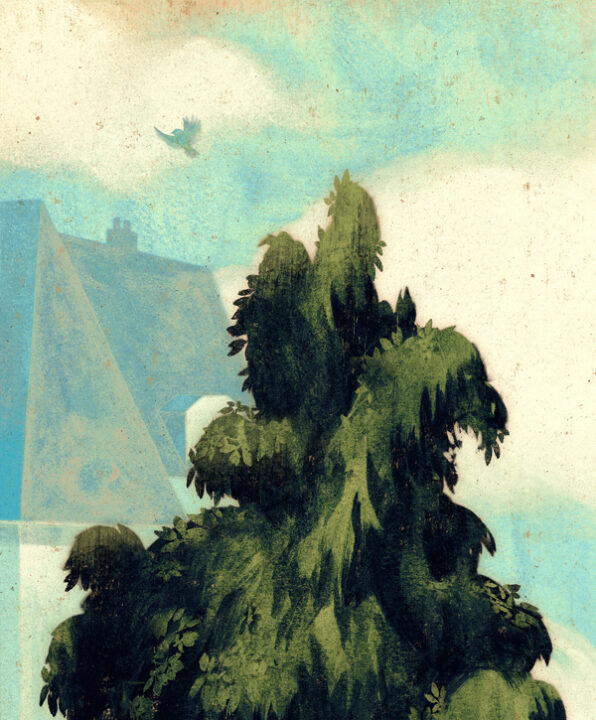
The tree Tim is talking about outside of Allen is a small but stately oak my father and I found framed by the white walls of the Château, a chickadee flitting around in its branches. The tree was planted in memory of Nick Garza ’11, whose tragic passing shocked the Middlebury campus. I learned online that Nick went out one winter night during his freshman year and never made it back to his dorm, his whereabouts unknown for three months before the state police found his body submerged below the Otter Creek Falls.
“That one, it was very difficult for the students,” Laurie Jordan told me, her voice tense as she remembered the months after Nick was lost. “Because we just didn’t have a body… We had to have little services in between, where we were kind of just gathering people up and reading a poem.”
After Nick’s tree was planted, Laurie held a memorial tree dedication ceremony for his family members and Middlebury classmates.
“Each year this Oak will cycle through the seasons,” reads her dedication. “People will find relief and shelter in its shade; they will delight in its growth and renewal and brilliant changing colors.”
On Tim Parsons’s blog, a post from 2011 about the memorial trees includes a beautiful picture of Nick’s memorial oak on what would have been his graduation day. The tree was only three years old at the time, and amidst youthful green leaves, his classmates had remembered their friend by hanging their graduation caps in the tree’s thin branches.
During my conversation with Tim, I asked him why he believes it is important for students to be remembered on campus, particularly if they didn’t live at Middlebury for a long time.
“It’s not really about them,” Tim told me. “It’s about where their friends are. The best memorial story is the big magnolia out on the main quad.”
I nodded my head in recognition of the distinctive tree near Voter Hall that my father and I were surprised to see had relatively recently been dedicated, a plaque underneath from the year 2016.
“His name was Murphy Roberts,” Tim said. “If you get on Instagram there’s a hashtag called ‘#senditformurph’ that is still active. It’s that Murphy. He was a wicked popular guy here and he loved that tree.”
Tim explained to me that although most memorial trees are planted, the magnolia is an exception, a rare example of a memorial tree that the late student was able to witness and appreciate while he was still alive. The family and friends of Murphy Roberts ’17 knew that he had always loved that magnolia and so, after he passed away the summer before his senior year, they approached Tim about dedicating the tree to him.
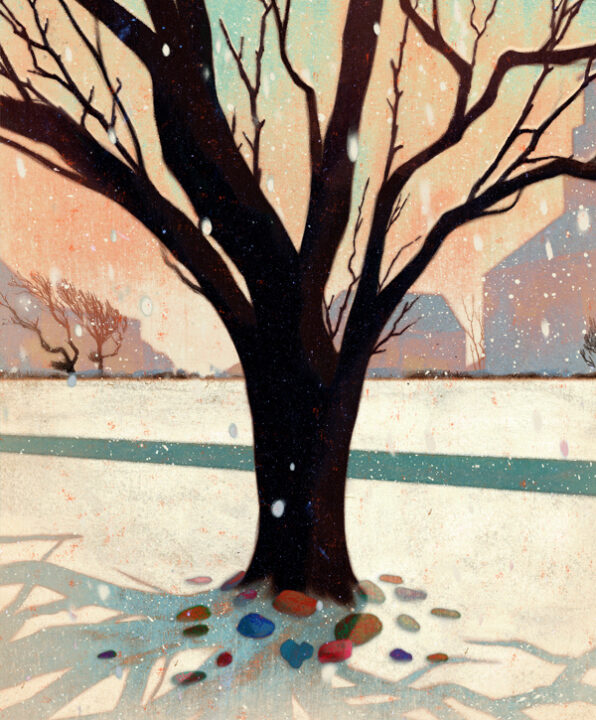
“His friends now,” Tim told me, “whenever they visit anywhere in the world, they’ll grab a small flat rock, paint it, and the next time they’re here, they’ll bring that rock and put it at the base of that tree. That’s their connection to Murph and this place, regardless of where they are.”
He showed me a picture of the plaque beneath the tree from the year after Murphy would have graduated from Middlebury, his name in the earth amid small stones that had been placed there in his memory. Many of the rocks had locations written on them in Sharpie, showing Murphy where they had been since he had passed. One rock was shaped loosely like a heart and had the simple word home scrawled across its surface.
“Sure, you can go visit a grave site,” Tim said. “But I don’t know, a tree here is more like a celebration of life.”
My dad and I finished our walk of the memorial trees at the opposite end of campus from where we began.
“Thank you for helping me,” I told him, as we stood beside the street that ran from campus into the town. I planned to go to my dorm room to read assignments for my class, while he was headed back to John’s apartment. In the morning, he would leave for a 13-hour train ride home. Before we parted ways, my dad repeated a quote to me from one of the last memorial plaques we visited on our walk, a sentence that I knew would stick with both of us for a long time. In many ways, those 11 words under the white oak by the arts building, planted in memory of Ryan Waldron ’97, best sum up everything I learned from the memorial trees and the people whose lives they grow in memory of.
“Spend all the time you have with those you care about,” my dad told me.
Ruby Salisbury is a senior at Middlebury. A version of this essay was written in a 2025 J-term course, When Truth Meets Craft: Practicing the Art of Literary Journalism. Salisbury subsequently received a scholarship to workshop the essay at the Bread Loaf Environmental Writers’ Conference last summer.
In Memoriam
Campus trees named in memory of students, faculty, staff, and alumni
JAPANESE LILAC for Nathan Alexander ’17
WHITE PINE for Matteo Baumgarten ’98
SUGAR MAPLE for Zenas Bliss, Class of 1928
RIVER BIRCH for Charles Burchard ’87
BUR OAK for Ian Cameron ’14
CUCUMBER MAGNOLIA for Janet Harris DeMoll ’44
SUGAR MAPLE for Debbie Edelstein ’96
HORSE CHESTNUT for Shirley Fisler, Former Staff
HEDGE MAPLE for Jason Fleishman ’03
AMUR CHOKECHERRY for Varian Fry
COLORADO SPRUCE for Anisa Gamble ’03
CHINKAPIN OAK for Nicholas Garza ’11
NORWAY MAPLE for Christine Guilmet ’01
EASTERN REDBUD for Betty Lou Hamilton, Former Staff
BUR OAK for John Hart IV ’01
COLORADO BLUE SPRUCE for Tiffany Holmes ’03
VARIEGATED TULIP for Emily Barclay Jackson ’38
COLORADO SPRUCE for Iniko Johnson ’03
PIN OAK for Jack Langerman ’19.5
BUR OAK for Pavlo Levkiv ’11
SUGAR MAPLE for Scott Margolin ’99
SUGAR MAPLE Michael McGinn ’90
RED MAPLE for Howard Munford ’34, Professor Emeritus of American Literature
KATSURA TREE for Emilo Nunez ’93
PAPER BIRCH AND SUGAR MAPLE for Colin O’Neill ’97
COLORADO SPRUCE for Maika Prewitt ’03
FREEDOM APPLE for Fran and Hank Prickitt, Professor Emeritus of English
STAR MAGNOLIA for Murphy Roberts ’17
BLUE SPRUCE for Jim Ross ’51, Retired Staff
FLOWERING CRABAPPLE for Sarah VanDerveer Ryan ’82
RED OAK for T. Ragan Ryan ’91
EUROPEAN BEECH for Scott Sandblom ’82
PAPERBARK MAPLE for Elena Nikolaevna Shchepina, Kathryn Wasserman Davis School of Russian
SELKIRK CRABAPPLE for Matthew Slautterback ’93
WHITE OAK for Daniel Stark ’01
SERBIAN SPRUCE for Marija Udzenija ’99
WHITE OAK for Ryan Waldron ’97
RED OAK for Benjamin Wieler ’11
Leave a Reply