
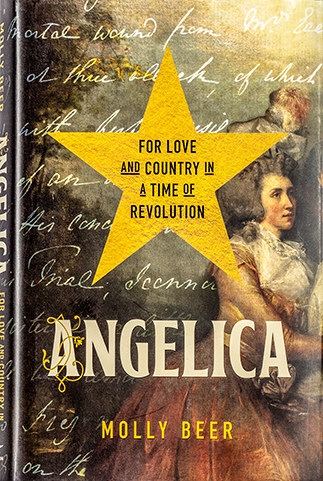
ANGELICA
Molly Beer
For many, Angelica Schuyler Church is best known as Alexander Hamilton’s “saucy” sister-in-law, who appears as a romantic figure in the musical Hamilton. For Molly Beer, MA English ’05, she is much more. Growing up in Angelica, New York, Beer learned about Angelica early on, and her curiosity turned into a decades-long research project. The result is Angelica: For Love and Country in a Time of Revolution, a biography that tells how integral a part Angelica played in political, social, and diplomatic circles during the Revolutionary War and the years after. With meticulous research, particularly through Angelica’s extensive correspondence, Beer reveals both her personality—witty, perceptive, and astutely observant—and her influence on figures like Hamilton, Thomas Jefferson, and Marquis de Lafayette. With so much material available about this historic period, Beer’s story provides a fresh view of an often male-dominated subject from the perspective of an influential woman who helped shape America’s founding narrative. With clear and accessible prose, Beer provides a readable account of an extraordinary woman whose life was meaningful far beyond her connection to Hamilton.
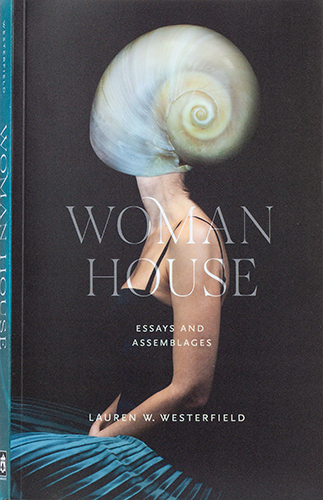
WOMAN HOUSE
Lauren W. Westerfield
Author Lauren Westerfield ’07 has published her second book, Woman House: Essays and Assemblages. In this memoir, she explores her relationship with her mother and the details of their history, which reveal a more complex connection between them than Westerfield had realized. As she cares for her chronically ill mother, Westerfield reflects on who her mother has been and who she is in the present, and in so doing, looks closely at her own childhood, coming of age, and adulthood with new eyes. With elegant and often poetic prose, she delves into ideas about family dynamics; the role art plays in personal discovery; the complex architecture of the female body; and women’s experiences that range from love and commitment to rape, identity, and what is genetically passed down versus what one’s environment cultivates. Offering a sharp-eyed look at what it means to inherit a mother’s pain while striving to curate one’s own pleasure, Westerfield’s essays are deeply thoughtful and vulnerable. Yet through her lens they can provide insights into any woman’s journey through life.
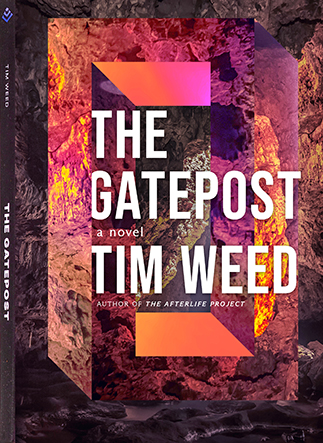
THE GATEPOST
Tim Weed
In 2004, Gregory Weatherhead walked into the forest on his rural Vermont property and vanished without a trace. Twenty years later, his daughter, Esme, has returned to live on the property and write a book about her father and his disappearance, seeking closure. Such is the premise of the latest novel from Tim Weed ’87. And once again, nothing is as it seems in his plot. Gregory was pursuing an important research project, “one that he felt had the potential to rescue the human species from its current downward trajectory.” It involved experiments with taking high doses of psilocybin mushrooms and experiencing a series of strangely vivid hallucinations while seated in a cave. Something went awry for Gregory, and Esme, who has learned about the cave from his field journal, sets out to find it with geologist Lucas St. Pierre. In what seems a straightforward search, the two begin to confront hidden forces that test their sanity and put their safety at risk. Weed’s thriller delves into Mesoamerican cosmology, geological science, and the otherworldly wonder of hallucinogenic phenomena, taking the reader through strange twists on reality and perception. Part science fiction and part spiritual journey that flirts with the boundaries of alternate dimensions, this story will keep you turning the pages.
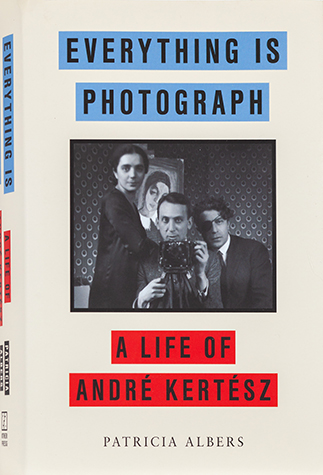
EVERYTHING IS PHOTOGRAPH
Patricia Albers
Author and art historian Patricia Albers, MA French ’72 has produced another important biography about a major artist whose name may not be instantly recognizable. Everything Is Photograph: A Life of André Kertész is a comprehensive look at the man who has been called “the father of modern photography.” The first full biography of the Hungarian-born photographer, the book chronicles his early interest in the medium, his move to Paris to make a name for himself and his success, his time of poverty and obscurity in New York during WWII, his eventual 1964 retrospective at the Museum of Modern Art, and the years of creative work that followed. Known for being one of the first to use the handheld Leica camera, he became famous for his photos of street life and fleeting human moments. With deep archival research and the use of interviews and previous scholarship, Albers reveals the man behind the camera with empathy but also a clear eye to the flaws behind the mythology Kertész wove around his life. Albers’s expertise in analyzing photographic art also allows her to critique his work with acute visual sensitivity, adding glimpses into Kertész’s internal psychological makeup. The result is a well-rounded look at the complex artist who contributed so much to photographic history.
Leave a Reply